The flow chart below shows the recycling procedure of glass bottles. Summarise the information by selecting and reporting the main features, and make comparisons where relevant.
The flow chart below shows the recycling procedure of glass bottles. Summarize the information by selecting and reporting the main features, and make comparisons where relevant.
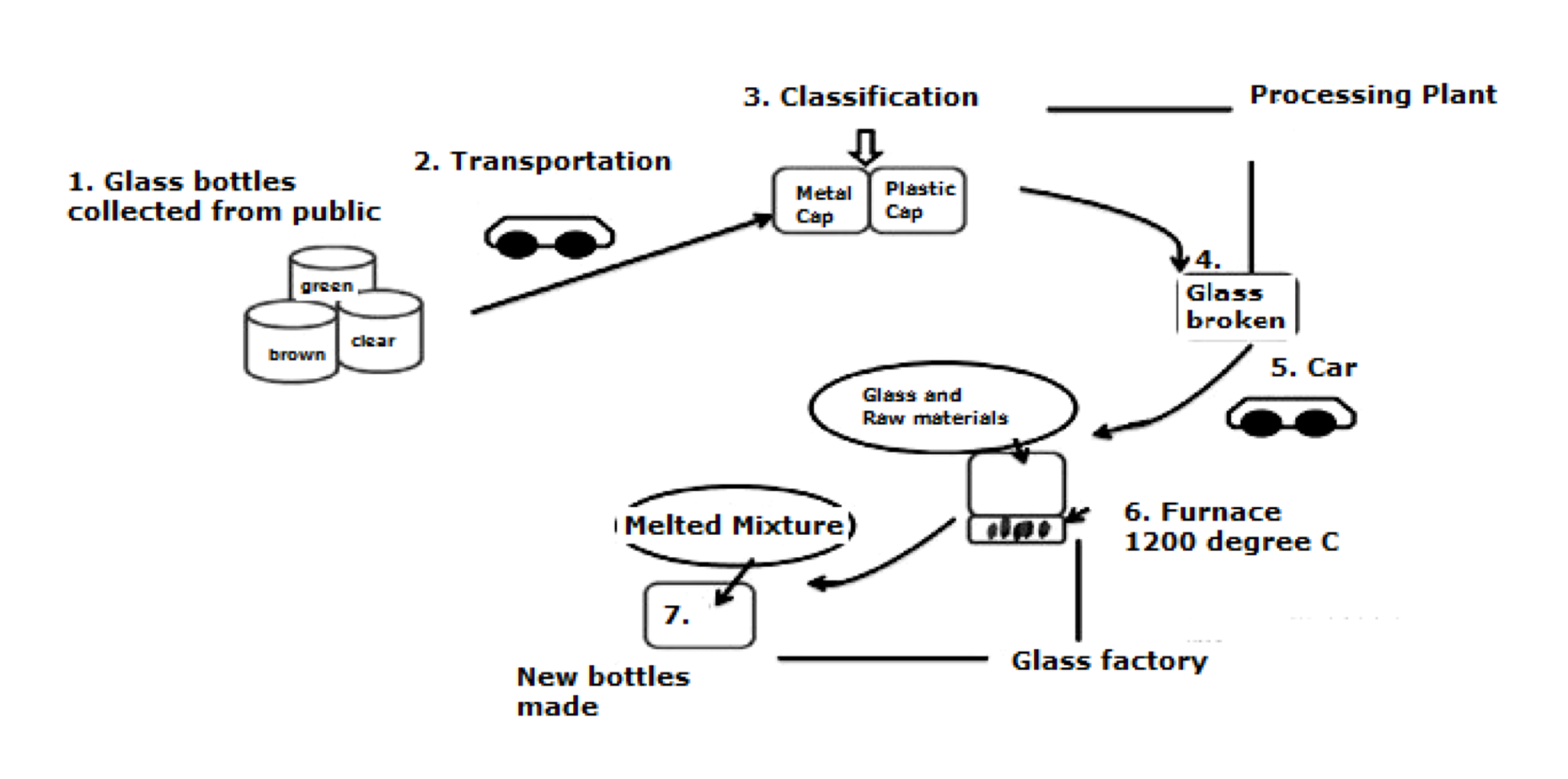
The process diagram illustrates the procedure for recycling glass bottles.
Overall, the recycling process consists of several stages, beginning with the collection of used bottles, followed by classification, melting, and finally the production of new bottles.
Initially, green, brown, and clear glass bottles are collected from the public through recycling bins. These bottles are then transported to a processing plant, where they are sorted based on their material type, such as metal or plastic caps, which are removed. After sorting, the glass bottles undergo a smashing process to break them into smaller pieces.
The broken glass is then transported to a glass factory, where it is combined with raw materials like sand, soda ash, and limestone. This mixture is heated in a furnace at approximately 1200°C to melt the glass. The melted glass is subsequently molded into newly formed bottles, ready for reuse.
This systematic process ensures efficient recycling of glass materials into reusable bottles.